 Get App
 Store
Store Referral
 Help?
Help?

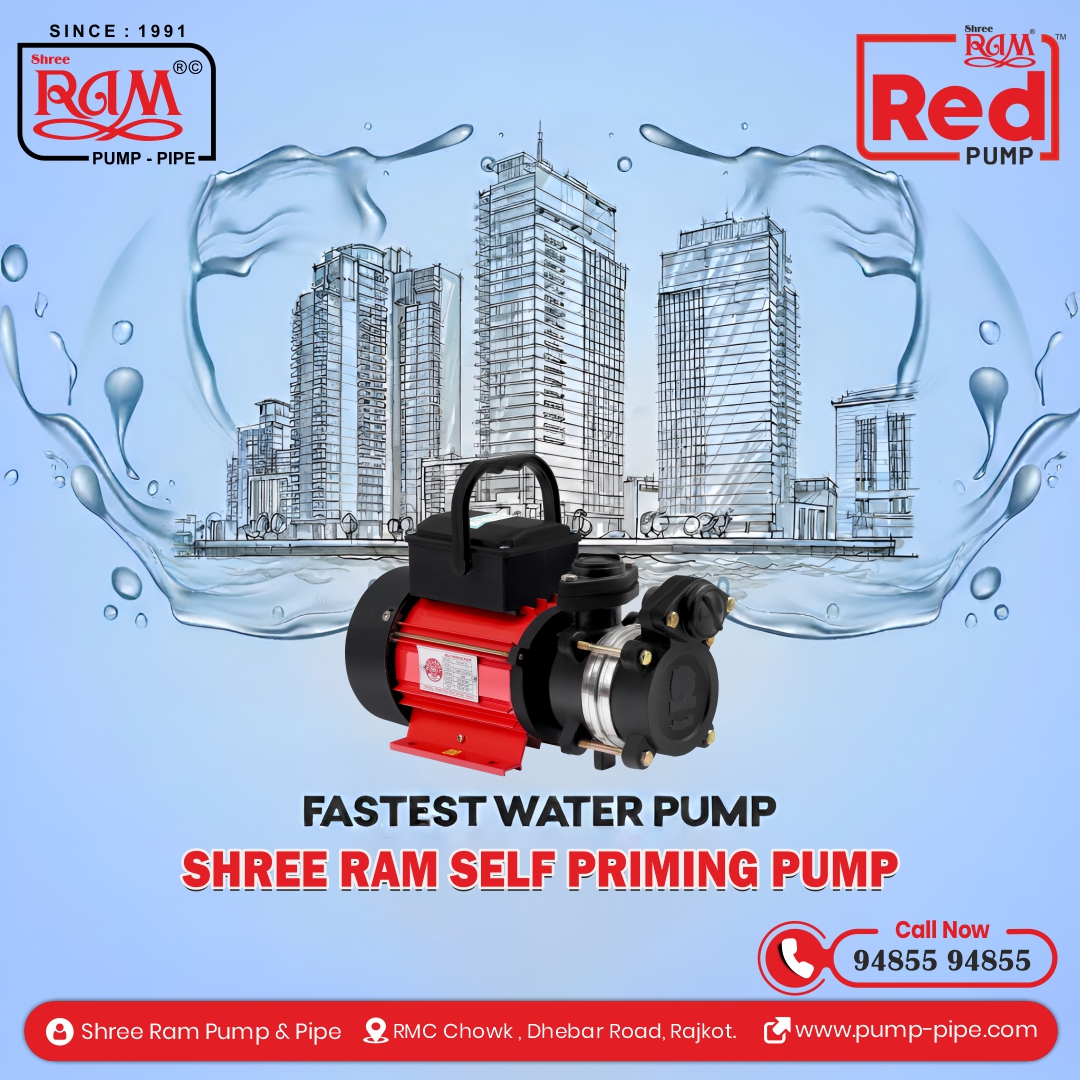
Water pumps play an important role in agriculture, homes, and industrial water systems. One of the most reliable and commonly used pumps is the self-priming pump. Many people search for "what is a self-priming pump," "how does a self-priming pump work," and "self-priming pump applications" before purchasing one.
In this article, we will explain the self-priming pump working principle, advantages, uses, and installation basics so you can understand why this pump is widely used.
A self-priming pump is a type of pump designed to automatically remove air from the pump system and start pumping water without manual priming every time.
In a normal pump, the suction pipe must be filled with water before the pump starts working. However, a self-priming water pump can handle small amounts of air and create suction on its own, making it easier to operate.
Because of this feature, self-priming pumps are widely used in agriculture, homes, irrigation systems, and water transfer applications.
The self-priming pump working principle is based on the ability of the pump to mix air and water to create suction.
Here is how it works:
When the pump starts, the impeller begins rotating.
The pump mixes air and water inside the casing.
Air is separated and pushed out through the discharge pipe.
Water remains in the pump casing.
Gradually the pump creates a strong suction and starts drawing water from the source.
Once the air is completely removed, the pump begins operating like a centrifugal pump, providing continuous water flow.
This is why many people search for the self-priming pump working principle with a diagram to better understand this process.
There are many self-priming pump applications in daily life and industries.
Common uses include:
Agriculture irrigation systems
Water supply for homes
Garden watering systems
Construction sites
Industrial water transfer
Drainage and wastewater pumping
Because of their reliability, self-priming pumps are widely used in farming and agriculture, where water needs to be lifted from wells, tanks, or canals.
There are several advantages of self-priming pumps compared to traditional pumps.
Self-priming pumps do not require manual priming every time the pump starts.
They can handle air in the system, which prevents pump failure.
Many farmers prefer self-priming pumps for agriculture because they are simple and efficient.
Self-priming pumps usually require less maintenance compared to other pump types.
These pumps can be used for residential, agricultural, and industrial purposes.
Many people compare self-priming pumps vs. normal pumps before buying one.
| Feature | Self-Priming Pump | Normal Pump |
|---|---|---|
| Priming | Automatic | Manual |
| Maintenance | Low | Higher |
| Air Handling | Yes | No |
| Ease of Use | Easy | Moderate |
Because of these benefits, self-priming centrifugal pumps are widely preferred for water supply systems.
Proper self-priming pump installation is important for efficient performance.
Installation tips:
Place the pump close to the water source
Ensure the suction pipe is airtight
Use proper pipe diameter
Install a foot valve if needed
Correct installation improves pump life and performance.
Regular self-priming pump maintenance helps prevent problems.
Common issues include:
The pump is not starting properly
Low water flow
Air leakage in suction pipe
Most self-priming pump troubleshooting problems are caused by air leaks, clogged pipes, or improper installation.
Checking pipes and seals regularly can solve most issues.
A self-priming pump is one of the most efficient and reliable solutions for water pumping needs. Its ability to remove air automatically and start pumping without manual priming makes it ideal for agriculture, homes, and industrial applications.
If you are looking for a self-priming water pump for agriculture or home use, choosing the right pump and installing it properly can ensure long-lasting performance and efficient water flow.